Word Wars - Word Game
- 4.4
- Rating
- 5.00M
- Installs
- Free
- Price

 Analysis by App-foxy
I found Word Wars most interesting when I stopped treating it as a quick word puzzle and started using it as a small, flexible social break. It is a free word game from PlaySimple Games, built around making words with friends, and its basic appeal is easy to understand: open a match, look at the letters available, and try to make the strongest move you can. The format is familiar enough for casual players, but it still gives me room to think, experiment, and improve.
What makes this game worth considering is not that it completely reinvents word games. It does not. Its value comes from how approachable the central activity feels and how naturally it can fit into spare moments. I can play when I have a few minutes, return later, and treat a match as either a relaxed vocabulary exercise or a more competitive challenge. That flexibility also matters for people who need a game that can be enjoyed at their own pace rather than demanding constant attention.
At the same time, I would not recommend it blindly to everyone. The experience depends on enjoying word formation, accepting repeated turns, and being comfortable with the way a free game may encourage optional purchases. Players looking for a large adventure, a story campaign, or fast action will probably find the format too restrained. My review focuses especially on how clearly it works for different abilities and everyday situations, because a word game is only enjoyable when its presentation and pace do not get in the way of thinking.
You May Also Like

 Blood Strike: 2.5 Anniversary
Blood Strike’s Loadouts Turn Every Drop Into a Tactical Gamble
A close look at Blood Strike’s custom loadouts: how fast access to signature weapons reshapes its battle royale rhythm, rewards preparation, and narrows the gap between fights.

 Pandora - Music & Podcasts
Pandora’s Music Is Easy to Start, but Harder to Recover
Pandora’s strength is its low-effort path from a seed to a station. Its weak spot is how much confidence it asks you to place in connection, setup, and quiet recovery.

 8 Ball Pool
 Is Built on Rivalries, Rematches, and Routine
A close look at the rivalries, rematches, shared routines, and unanswered safety questions that turn a quick pool match into a persistent mobile community.

 Samsung Music
’s Quiet Strength Is Playing What You Already Own
Its reach comes less from spectacle than from dependable access to a personal library. That simplicity is both the app’s strongest retention engine and its ceiling.

 AccuWeather: Weather Radar
AccuWeather Review: A Quick, Clear Forecast for Everyday Decisions
For everyday plans, the best forecast is the one you can understand quickly. AccuWeather makes rain timing, radar, and local conditions easy to act on, with a few trade-offs.

 Hill Climb Racing
Why Hill Climb Racing Still Turns Crashes Into One More Run
A tiny car, a bumpy hill and one more upgrade: Hill Climb Racing keeps resurfacing because its simple chaos makes every near-miss feel personal.
More From Our News Desk



How the board feels to read and navigate
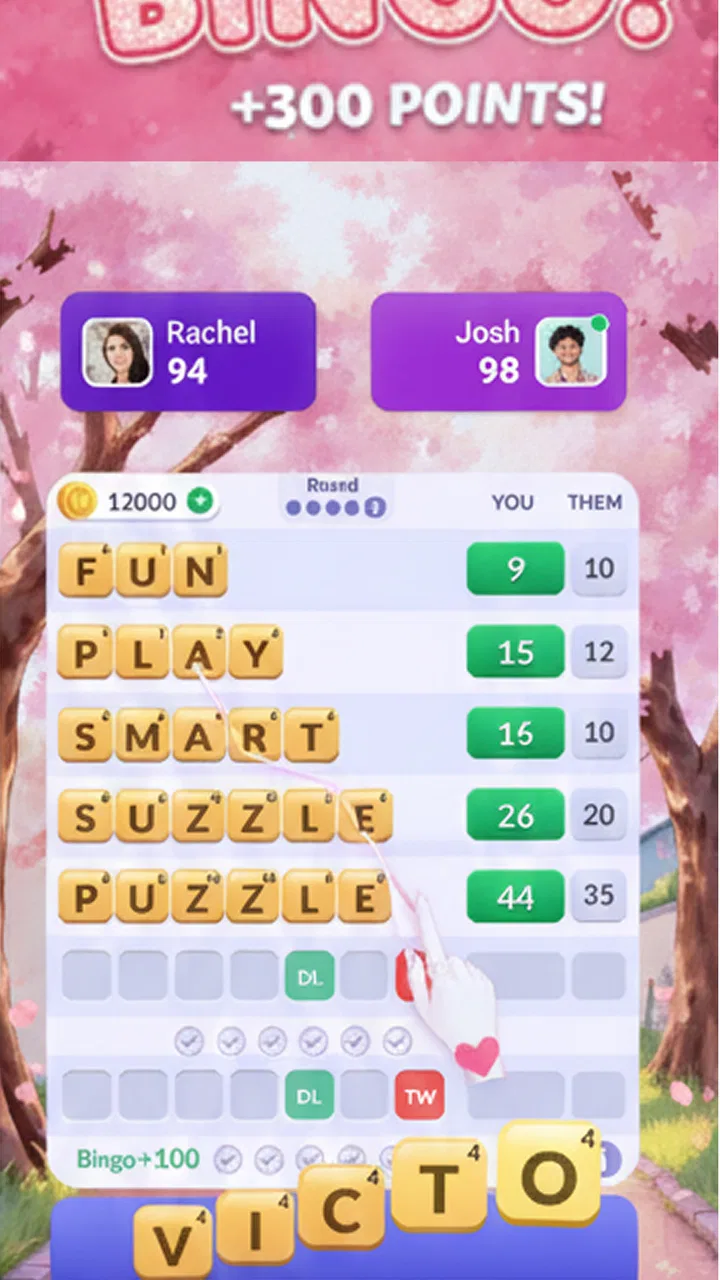
The strongest part of the design is the direct relationship between the letters and the action. I do not need to learn a complicated control scheme before I can begin forming words. That makes the first few minutes comfortable for someone who already understands this kind of game, while the turn-based structure gives new players time to observe what is happening instead of forcing immediate decisions.
For me, readability is more than seeing individual letters. It is also being able to understand whose turn it is, what move has just been played, and what I am expected to do next. A word game can become tiring when the board, status information, and controls compete for attention. Word Wars works best when I concentrate on one task at a time: inspect the available letters, consider possible words, and submit a move only when I am ready.
That simple rhythm can be useful for players who prefer predictable navigation. There is less pressure than in a timed action game, and the turn structure gives me an opportunity to pause if the board becomes visually busy or if I need more time to process the possibilities. It also makes the game suitable for short sessions on a phone, provided I am comfortable reading a compact game board.
I would still suggest changing the phone’s display settings before playing if small text or dense layouts are difficult for you. Larger system text may help in surrounding interface elements, but it should not be assumed that every part of the game will scale perfectly. I found it better to keep the screen clean, hold the phone at a comfortable distance, and avoid playing in a cramped view where the letter tiles and status information become harder to distinguish.
One practical habit improved my experience: I stopped trying to scan the whole board randomly. Instead, I first looked for familiar short word patterns, then checked whether a longer word could use the same letters. This reduced visual wandering and made the game feel more manageable. It is a small strategy, but it helps players who find an open-ended letter layout overwhelming.
Learning the game without being rushed
The game’s word format is easy to explain to a friend, which is one reason it works well as a shared activity. I can introduce the basic idea without giving a long tutorial, then let the other person learn through a few turns. That is particularly helpful for players who dislike complicated onboarding or who need to understand a game by seeing it in action.
There is also a useful difference between knowing the rules and feeling confident. A player may understand how to create a word but still struggle to choose between a safe move and a more ambitious one. I recommend using early turns to learn how the board rewards different placements rather than chasing the longest word immediately. This makes the game less intimidating and gives players with different vocabulary levels a fairer way to build confidence.
For people who read more slowly, the absence of real-time pressure is a meaningful advantage. I can take a moment to check spelling mentally, reconsider a placement, and make a decision without feeling that a fast opponent has already taken the opportunity away. That does not remove every challenge, but it changes the challenge from speed to attention and vocabulary.
Motor, sensory, and cognitive comfort
From a motor perspective, a turn-based word game is generally less demanding than a game that expects rapid taps, swipes, or precise timing. I do not need to coordinate a series of actions under pressure. That makes Word Wars a better fit for players who prefer deliberate touch interaction or who find repeated fast gestures uncomfortable.
Still, the game is not automatically effortless for every hand or every device. Selecting letters, moving through the board, and confirming a word can require repeated touch input. Someone with limited reach, tremors, or difficulty with small targets may find individual tiles or controls tiring, especially during a longer session. My practical advice is to play in short rounds, support the phone securely, and use a stylus if that is already part of your normal mobile routine.
The sensory side deserves equal attention. A word game asks me to distinguish letters quickly, and that can be harder when contrast is weak, glare is strong, or the screen is crowded. Playing indoors with reduced reflections made the board easier to inspect. I also found that increasing the device’s brightness only helped up to a point; excessive brightness can create its own discomfort, so the best setting depends on the room.
Players sensitive to sound or visual interruption may want to keep the phone in a calmer environment. I prefer to make my move somewhere without constant notifications because interruptions break the mental process of comparing possible words. The game can serve as a quiet activity, but the phone itself remains a source of distractions outside the game.
Cognitive accessibility is where the format has a genuine strength. I can approach a turn in several ways: search for a simple word, look for a high-value placement, or use the moment as a vocabulary exercise. There is no need to solve every possibility. That choice lets me adjust the mental workload depending on my energy. On a tired day, I can make a straightforward move; when I feel more focused, I can examine the board more carefully.
One advanced habit I found useful was separating word discovery from board evaluation. First I generated a few possible words without judging them. Then I compared their positions and likely value. Doing both at once made me lose track of options, while separating the steps reduced mental clutter. This is especially helpful for anyone who finds multitasking difficult.
Vocabulary differences and social comfort
The social element can be motivating, but it can also create a confidence gap. A player with a larger vocabulary may appear to dominate, even when the other person understands the rules perfectly. I think the best way to keep the experience welcoming is to treat matches as practice rather than a test of intelligence. A shorter or simpler word can still be a sensible move if it fits the board well.
I would be cautious about recommending it as a first choice for someone who becomes frustrated by unfamiliar words or by losing repeatedly. The game rewards language knowledge, and that naturally favors some players. People learning English may enjoy it as a vocabulary challenge, but they should expect the experience to expose gaps in spelling and word recognition rather than quietly teach every answer.
For friends or relatives with different skill levels, a cooperative attitude matters more than trying to prove who is the better player. Taking time to explain a move or discussing why a placement worked can turn a difficult match into a useful learning activity. That is not a built-in accessibility feature; it is a way I found to make the social format more inclusive.
Using it in real situations
My favorite everyday use is a short match during a waiting period. Instead of opening a game that requires remembering a story or reaching a checkpoint, I can make progress through one focused turn. It fits a train platform, a lunch break, or a quiet few minutes before an appointment, as long as the surroundings allow me to read and tap comfortably.
The same flexibility can work for friends who do not share the same schedule. A turn-based word game does not require both people to be holding their phones at the same moment. That makes it more practical than a live multiplayer game for relatives in different routines. I can make a move when I have the mental space, then return to ordinary tasks without feeling that I have abandoned a fast match.
There is a trade-off, though. A delayed turn can make the experience feel less energetic, particularly if I prefer immediate feedback. Players who need a clear beginning and end may find an ongoing match harder to organize than a single-player puzzle. I would choose a traditional offline word puzzle instead when I want a completely self-contained session with no social waiting.
It can also be a reasonable option for a family member who wants a light mental activity but does not enjoy reflex games. The Everyone content rating makes it suitable for a broad audience in terms of age classification, but that should not be confused with every player finding the vocabulary or interface equally easy. Personal reading ability, vision, motor comfort, and tolerance for competition still matter much more in practice.
On a phone with a smaller display, I would test the board during a brief session before committing to longer matches. The game’s central action is simple, but small letters can make a supposedly relaxing activity feel like close visual work. On a larger phone or tablet-sized screen, the board may feel easier to inspect, although the overall comfort still depends on how the interface fits that device.
Free access and the purchase question
The game is free to download, which makes trying it uncomplicated. I could see whether the word format suited me without paying at the start. However, optional in-app purchases range from $0.99 to $99.99 per item, so I would treat the purchase screen as part of the decision rather than assuming that free access means a completely pressure-free experience.
My advice is simple: decide in advance whether you want to spend anything, and use the device’s purchase controls if you are setting the game up for a child or for someone who may tap through prompts quickly. A player who wants a purely paid-once experience may prefer a premium word game instead, even if it offers fewer social features or a smaller content pool.
I also think the purchase model affects who should skip this game. If reminders about optional items interrupt your concentration or make a casual activity feel commercial, a paid alternative with no in-app economy will probably be more comfortable. If you are happy to play for free and ignore extras, the basic format remains approachable.
What still creates barriers
The biggest barrier is not physical interaction but the language itself. Word games can be welcoming to someone who enjoys spelling and frustrating to someone who struggles with vocabulary, dyslexia, second-language reading, or inconsistent concentration. I would not describe the game as an all-purpose brain exercise for every player. Its benefits are closely tied to whether forming and comparing words feels rewarding rather than exhausting.
Another barrier is the expectation that the player will infer good choices from the board. A person who needs highly explicit guidance may not find enough support in simply being shown letters and possible moves. I often had to create my own method for narrowing options. That is part of the fun for experienced players, but it can feel like a wall for beginners who want clearer coaching.
Visual density can become a problem when the screen is small, the lighting is poor, or the player needs stronger separation between interface elements. I would not choose it for someone who cannot comfortably inspect compact letter tiles unless they have already tested the game on their device. Accessibility settings at the operating-system level may help with general phone use, but they cannot guarantee that every game element will remain equally clear.
The social structure can also be a mixed experience. Playing with others adds motivation and accountability, but it introduces waiting and comparison. Someone who prefers complete control over pace may be happier with a solo word search, crossword, or an offline anagram game. Conversely, someone who loses motivation alone may appreciate having another person connected to the match.
Finally, the game is not ideal for every context. I would avoid playing while walking, during conversations, or anywhere that requires continuous attention. Looking closely at letters encourages concentration, and even a slow word game can distract me from what is happening around me. Its flexible pace makes it convenient, not automatically safe in every situation.
Who should try it and who should pass
I would recommend Word Wars to players who enjoy classic word-building, want a social game that can be played in separate bursts, and prefer thinking time over reflexes. It is a particularly sensible choice for a friend who likes language puzzles but does not want a complicated strategy system. The game’s broad age classification and free entry also make it easy to suggest for an informal family trial, provided everyone is comfortable with the vocabulary challenge and optional purchase prompts.
I would point a different player toward another category if they want rich teaching tools, a fully offline experience, or a guaranteed distraction-free interface. A dedicated crossword app may be better for structured clues, a spelling trainer may be better for deliberate lessons, and a premium word game may be preferable for anyone who dislikes in-app purchases. Those alternatives can be stronger when the player’s main goal is learning, solitude, or complete control over the session.
Compared with a standard single-player word puzzle, this game’s distinctive advantage is the human connection. A move can feel more meaningful when another person will respond, and that ongoing exchange can keep the activity alive longer than a stack of disposable puzzles. Compared with a fast multiplayer game, its advantage is patience: I can think before acting instead of relying on reaction speed.
The trade-off is that it may feel less satisfying when I want a clear solo finish or immediate momentum. The social layer is an asset only when I enjoy waiting for and responding to another player. That is why I see it as a companion game rather than a universal replacement for every word app.
My inclusive verdict
Word Wars is a straightforward word game that earns its place through a comfortable pace, familiar rules, and a social structure that can fit around ordinary life. PlaySimple Games has kept the central activity easy to understand, and I appreciate that I can approach each turn casually or think more strategically depending on my energy. The game has reached more than five million installs, and its average rating is 4.4 from around eighty-four thousand ratings, which matches my impression that the core format has broad appeal.
It launched on August 29, 2017, and the current version is 1.856, with support beginning at iOS or Android operating-system version 9. Those details make it a practical candidate for many existing phones, although device comfort matters more than compatibility alone. A game can install successfully and still be unpleasant if the letters are too small or the touch targets are awkward for a particular player.
I found the best experience came from treating accessibility as a personal setup process: choose a comfortable screen, reduce glare, play in short sessions, and separate word discovery from board evaluation. Those habits do not change the game’s design, but they can make its demands easier to manage. For a friend who enjoys language, shared matches, and a relaxed pace, I would gladly recommend giving it a try.
My final recommendation is conditional but positive: choose Word Wars when you want a social word challenge that respects your time, and skip it when you need a fully offline, heavily guided, or purchase-free experience. It is not perfect for every ability or context, but its deliberate turn structure gives many players a fairer starting point than fast-action games. As long as the vocabulary focus and compact mobile presentation suit you, it can become a pleasantly repeatable way to keep your mind occupied and stay connected with another player.
FAQs for Word Wars - Word Game
01What is Word Wars - Word Game?
Word Wars - Word Game is a competitive word puzzle game designed for Android and iOS platforms. Players can challenge friends or random opponents to create high-scoring words from a set of letters. The game fosters strategic thinking and vocabulary skills, making it ideal for word enthusiasts.
02Is Word Wars - Word Game free to play?
Yes, Word Wars - Word Game is free to download and play. However, it offers in-app purchases for players who want to enhance their gaming experience by purchasing additional features, such as extra hints or removing ads. These purchases are optional and not required to enjoy the game.
03How does the multiplayer feature work in Word Wars?
In Word Wars, the multiplayer feature allows you to challenge friends or compete against random opponents worldwide. You take turns creating words from a given set of letters, aiming for the highest score. The game includes a chat functionality to interact with your opponent, adding a social element.
04Are there any in-game ads in Word Wars?
Yes, Word Wars includes ads that appear between turns or rounds. While these ads help keep the game free, players have the option to remove them through a one-time purchase. This can enhance the gaming experience by providing uninterrupted gameplay.
05What is the age rating for Word Wars - Word Game?
Word Wars - Word Game is rated for ages 4 and up, making it suitable for a wide audience. The game focuses on word creation and vocabulary, offering an educational aspect that can be enjoyed by both children and adults. Parents can feel confident about its age-appropriate content.
Pros
- Challenging puzzles to enhance vocabulary.
- Smooth and intuitive user interface.
- Multiple game modes for varied play.
- Engaging multiplayer options.
- Frequent updates with new features.
Cons
- Ads can interrupt gameplay frequently.
- Requires constant internet connection.
- Limited customization options.
- In-app purchases can be expensive.
- Occasional lag on older devices.

Word Wars - Word Game
Gallery